
المقال: Private Label Cosmetics for Startups: Step-by-Step Guide
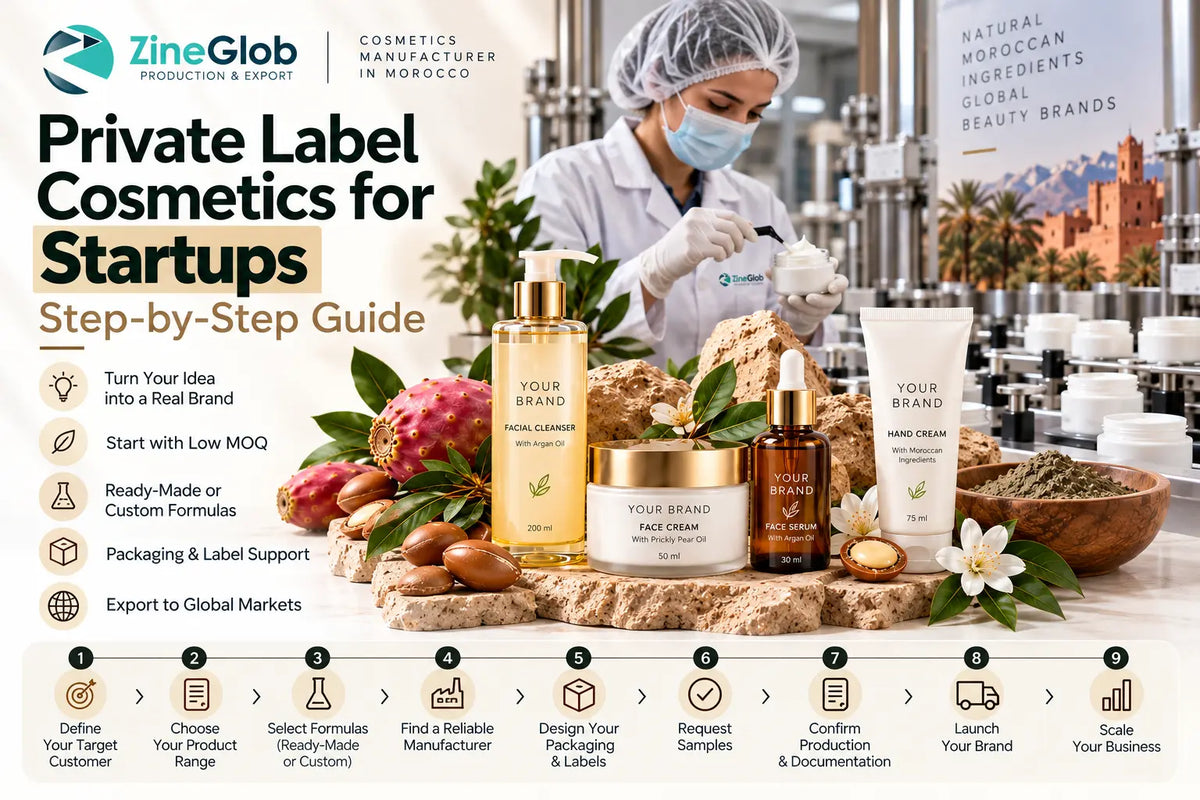
Private Label Cosmetics for Startups: Step-by-Step Guide
Private Label Cosmetics for Startups: Step-by-Step Guide
Starting a cosmetics brand can feel complicated, especially when you are dealing with product development, packaging, regulations, manufacturing, and marketing for the first time.
Private label cosmetics can make the process much easier.
Instead of building your own factory or developing every product from zero, you can work with an experienced cosmetics manufacturer that already has the production capabilities, formulas, packaging options, and technical knowledge needed to bring your brand to market.
In this guide, we explain step by step how startups can launch a private label cosmetics brand with a practical and structured approach.
What Are Private Label Cosmetics?
Private label cosmetics are products manufactured by a cosmetic manufacturer and sold under your own brand name.
The manufacturer manages the production process, while you build the brand, choose the products, define the positioning, and manage sales and marketing.
Depending on the manufacturer, private label services may include:
-
Ready-made formulas
-
Formula customization
-
Product manufacturing
-
Filling
-
Packaging
-
Label design
-
Quality control
-
Product documentation
-
Export support
For startups, this can reduce the complexity and investment needed to enter the cosmetics market.
Why Private Label Is Attractive for Startups
Launching a cosmetic brand from scratch with your own factory requires major investment.
You may need:
-
Production equipment
-
Laboratory equipment
-
Qualified staff
-
Raw materials
-
Packaging inventory
-
Quality systems
-
Testing procedures
-
Manufacturing facilities
Private label allows startups to use the infrastructure of an established manufacturer.
This can help reduce:
-
Initial investment
-
Development time
-
Production risk
-
Operational complexity
It also allows entrepreneurs to focus more on the commercial side of the business.
Step 1: Define Your Target Customer
Before choosing any product, determine who you want to sell to.
Ask yourself:
-
What age group am I targeting?
-
What skincare or haircare problems do they have?
-
What price range can they afford?
-
Which market am I targeting?
-
What type of products do they already use?
For example, you might target:
-
Young consumers looking for simple skincare routines
-
Premium skincare customers
-
Natural beauty consumers
-
Haircare customers
-
Customers interested in Moroccan ingredients
Your target customer should influence every major decision that follows.
Step 2: Choose a Clear Brand Positioning
Your brand needs a clear reason to exist.
Avoid creating a generic cosmetics brand with no distinctive identity.
Possible positioning ideas include:
-
Natural Moroccan skincare
-
Premium anti-aging skincare
-
Minimalist skincare
-
Hair repair products
-
Sensitive-skin products
-
Argan-based cosmetics
-
Prickly pear skincare
-
Traditional Moroccan beauty rituals
A clear positioning will make it easier to choose your products, packaging, visuals, and marketing messages.
Step 3: Start With a Small Product Range
Many startups make the mistake of trying to launch too many products at once.
Starting with a smaller range can be easier to manage.
For example, a skincare startup could launch:
-
Facial cleanser
-
Face serum
-
Day cream
-
Night cream
Or you could start with three hero products:
-
Argan oil
-
Prickly pear seed oil
-
Face cream
A focused range can simplify:
-
Inventory
-
Marketing
-
Packaging
-
Product photography
-
Customer education
-
Cash flow
You can add more products later once you understand what customers want.
Step 4: Decide Between Ready-Made and Custom Formulas
One of the first major choices is whether to use existing formulas or request custom development.
Ready-Made Formulas
Ready-made formulas are already developed by the manufacturer.
They can be a strong option for startups because they usually offer:
-
Faster launch
-
Lower development costs
-
Less R&D
-
Simpler production planning
You can focus on branding, packaging, and marketing.
Customized Formulas
Customization can be useful if your brand needs a more distinctive product.
You may be able to modify:
-
Ingredients
-
Fragrance
-
Texture
-
Color
-
Active ingredients
Custom development usually requires more time and budget.
For many startups, beginning with selected existing formulas and adding customization later can be a practical strategy.
Step 5: Find a Reliable Cosmetics Manufacturer
Your manufacturer is one of the most important partners in your business.
Do not choose only based on price.
Evaluate:
-
Manufacturing experience
-
Product categories
-
Quality control
-
Certifications
-
MOQ
-
Packaging options
-
Documentation
-
Communication
-
Export experience
Ask whether the manufacturer works with startups and whether they can support smaller initial orders.
A good manufacturer should understand that a startup may begin with lower quantities and grow over time.
Step 6: Understand MOQ Before You Start
MOQ means Minimum Order Quantity.
This is the minimum quantity you must order per product.
MOQ can depend on:
-
Formula
-
Packaging
-
Product size
-
Raw materials
-
Label production
-
Customization level
For startups, MOQ is especially important because it affects the amount of cash you need to invest.
For example, launching five products with high minimum quantities may create much more inventory risk than launching two or three products with manageable quantities.
Always ask about MOQ before finalizing your product range.
Step 7: Define Your Startup Budget
Your budget should include much more than manufacturing.
Plan for:
-
Product manufacturing
-
Packaging
-
Labels
-
Boxes
-
Samples
-
Product testing
-
Registration
-
Shipping
-
Customs
-
Website
-
Photography
-
Advertising
-
Influencers
-
Initial inventory
A common mistake is spending nearly the entire budget on products and leaving very little money for marketing.
Your brand still needs customers after the products are manufactured.
Step 8: Choose Your Packaging
Packaging affects both your brand image and your costs.
For startups, standard packaging can often be more practical than highly customized packaging.
You may choose from:
-
Dropper bottles
-
Pump bottles
-
Jars
-
Tubes
-
Spray bottles
-
Airless bottles
Think about:
-
Formula compatibility
-
Product size
-
Target price
-
Shipping weight
-
Visual identity
-
Customer usability
Premium packaging can make a product look more expensive, but it can also increase your startup investment.
Choose packaging that matches your positioning and budget.
Step 9: Build Your Brand Identity
Your brand identity should look consistent across all products and marketing channels.
Create:
-
Brand name
-
Logo
-
Color palette
-
Typography
-
Packaging design
-
Label system
-
Visual style
Try to build a system that can grow with your brand.
For example, all products can share the same basic design while using different colors or details to identify each product.
Consistency makes your startup look more professional.
Step 10: Prepare Your Labels
Cosmetic labels need to look attractive, but they also need to include important product information.
Depending on the destination market, label information may include:
-
Product name
-
Net quantity
-
Ingredient list
-
Directions
-
Warnings
-
Batch number
-
Expiry information
-
Manufacturer information
-
Country of origin
Do not finalize or print large quantities of labels until you confirm the regulatory requirements of your target market.
Step 11: Request Samples
Samples are extremely important.
They allow you to evaluate the product before committing to full production.
Check:
-
Texture
-
Fragrance
-
Color
-
Absorption
-
Packaging
-
Label appearance
-
Overall experience
You can also give samples to a small group of potential customers and collect feedback.
This can help you identify problems before launch.
Step 12: Check Product Documentation
Ask your manufacturer which documents are available.
Depending on the product and destination market, you may need:
-
INCI ingredient list
-
Certificate of Analysis
-
Safety Data Sheet
-
Product specification
-
Technical documentation
-
Certificate of Origin
-
Manufacturing certificates
If your startup plans to export, discuss documentation requirements early.
Step 13: Understand Regulations in Your Target Market
Cosmetic regulations vary between countries.
Before production, investigate:
-
Product registration
-
Ingredient restrictions
-
Label requirements
-
Safety documentation
-
Import rules
-
Cosmetic claims
For example, the requirements for selling cosmetics in the European Union may differ from those in Saudi Arabia, the UAE, or the United States.
Regulatory planning should happen before your products are produced.
Step 14: Confirm Your First Production Order
Once the product, packaging, label, and commercial terms are approved, you can confirm production.
Check the following carefully:
-
Product names
-
Quantities
-
Formula
-
Packaging
-
Label artwork
-
Production timeline
-
Payment conditions
-
Shipping terms
-
Required documents
Small mistakes can become expensive once hundreds or thousands of units have been produced.
Always confirm everything in writing.
Step 15: Build Your Website Before Production Is Finished
You do not need to wait for the products to arrive before building your online presence.
While production is underway, prepare:
-
Website
-
Product pages
-
Social media accounts
-
Brand story
-
FAQ
-
Email marketing
-
Content plan
This allows you to launch faster once inventory arrives.
Step 16: Prepare Product Photography and Content
Strong visuals are especially important in cosmetics.
Prepare:
-
Product photography
-
Lifestyle images
-
Ingredient visuals
-
Short videos
-
Before-and-after content where legally appropriate
-
Product demonstrations
-
Educational content
Your content should explain:
-
What the product is
-
Who it is for
-
How to use it
-
Why it is different
Do not rely only on attractive packaging.
Customers also need a reason to buy.
Step 17: Plan Your Marketing Budget
Marketing is essential for a startup.
Your first marketing channels may include:
-
Instagram
-
Facebook
-
TikTok
-
Google
-
Influencers
-
Email marketing
-
Retail partnerships
Start by testing different messages and creatives.
Measure which products, audiences, and offers perform best.
Avoid spending your entire advertising budget before understanding what works.
Step 18: Launch With a Clear Offer
Your launch should have a clear message.
For example:
-
Launch offer
-
Bundle discount
-
Free delivery
-
Limited introductory price
-
Starter skincare routine
Make it easy for customers to understand what they should buy.
For a new brand, bundles can also help increase average order value.
Step 19: Collect Customer Feedback
After launch, listen carefully to customers.
Ask about:
-
Product performance
-
Texture
-
Fragrance
-
Packaging
-
Price
-
Delivery
-
Customer experience
Feedback can help you decide which products to reorder and which ones need improvement.
Step 20: Scale Based on Real Demand
Do not expand your product range simply because you can.
Use sales data.
If one product becomes your bestseller, consider:
-
Increasing production
-
Creating larger sizes
-
Building bundles
-
Developing complementary products
For example, if an argan hair serum performs well, you could later introduce:
-
Shampoo
-
Conditioner
-
Hair mask
-
Scalp serum
Growth should be based on actual customer demand.
How Much Money Do You Need to Start?
There is no single answer.
The budget depends on:
-
Number of products
-
MOQ
-
Packaging
-
Formula type
-
Customization
-
Registration
-
Freight
-
Marketing
A startup using existing formulas and standard packaging may require less investment than a highly customized premium brand.
The most important thing is to calculate the entire project before placing your first order.
Common Startup Mistakes
Avoid these common mistakes:
Launching Too Many Products
Start focused and expand later.
Choosing the Cheapest Manufacturer
Low prices can become expensive if quality or documentation is poor.
Ignoring Marketing Costs
Manufacturing the products is only part of the investment.
Skipping Samples
Always validate products before mass production.
Ignoring Regulations
Check your target market requirements before production.
Spending Too Much on Packaging
Premium packaging can be attractive, but it must make sense financially.
Ordering Too Much Inventory
Start with realistic quantities based on your budget and sales plan.
Private Label Cosmetics in Morocco for Startups
Morocco can be particularly attractive for startups interested in natural cosmetics and traditional ingredients.
Popular product concepts include:
-
Argan oil
-
Prickly pear seed oil
-
Moroccan black soap
-
Ghassoul
-
Rose water
-
Blue Nila
-
Aker Fassi
These ingredients can help startups build distinctive beauty concepts inspired by Moroccan beauty traditions.
Start Your Private Label Brand With Zineglob
Zineglob is a Moroccan cosmetics manufacturer specializing in Private Label manufacturing and Bulk supply.
We work with startups, entrepreneurs, existing brands, wholesalers, and distributors looking to transform cosmetic ideas into market-ready products.
Depending on your project, our support can include:
-
Product selection
-
Ready-made formula options
-
Customized solutions
-
Cosmetic manufacturing
-
Packaging
-
Label support
-
Technical documentation
-
Bulk supply
-
Export preparation
For startups, the objective is to create a realistic project based on the right products, quantities, packaging, target market, and budget.
As your business grows, your manufacturing strategy can grow with it.
Ready to Start Your Cosmetics Brand?
You do not need your own factory to build a cosmetics brand.
With the right product strategy, manufacturing partner, and marketing plan, private label can provide a practical route from idea to market.
Contact Zineglob
WhatsApp: +212 606-045084
Email: contact@zineglob.com
Website: www.zineglob.com
Private Label Cosmetics | Bulk Supply | Cosmetic Manufacturing | Made in Morocco


اترك تعليقًا
This site is protected by hCaptcha and the hCaptcha Privacy Policy and Terms of Service apply.