

How to Start a Private Label Cosmetics Brand: Complete Guide
How to Start a Private Label Cosmetics Brand: Complete Guide
Starting a cosmetics brand can be an exciting business opportunity, but turning an idea into a professional, market-ready product requires the right strategy, reliable manufacturing, compliant documentation, and strong branding.
Private label cosmetics make this process easier by allowing entrepreneurs, retailers, distributors, and existing beauty brands to launch cosmetic products without building their own manufacturing facility.
In this complete guide, we explain how to start a private label cosmetics brand step by step, from choosing your products to manufacturing, packaging, compliance, and launch.
What Are Private Label Cosmetics?
Private label cosmetics are products manufactured by a specialized cosmetic manufacturer and sold under another company's brand name.
Instead of investing in a factory, production equipment, laboratory facilities, and an internal formulation team, a brand can work with an experienced manufacturing partner.
Depending on the project, the manufacturer may provide:
-
Product formulation
-
Raw material sourcing
-
Manufacturing
-
Filling and packaging
-
Label design
-
Quality control
-
Regulatory documentation
-
Export support
This model allows brands to focus on marketing, sales, distribution, and customer acquisition while the manufacturing partner manages production.
Step 1: Define Your Brand Concept
Before selecting products, you need to clearly define your brand.
Ask yourself:
-
Who is my target customer?
-
Which market will I sell in?
-
What problem will my products solve?
-
Will my brand focus on natural, organic, premium, traditional, or modern cosmetics?
-
What price segment do I want to target?
For example, a brand targeting premium skincare customers may focus on products containing Moroccan ingredients such as argan oil, prickly pear seed oil, rose water, ghassoul, or other botanical ingredients.
A clear brand positioning will help you choose the right formulas, packaging, design, and marketing strategy.
Step 2: Choose Your Product Range
One of the biggest mistakes new cosmetic brands make is launching too many products at the beginning.
Starting with a focused collection is usually more manageable.
A skincare brand, for example, could start with:
-
Facial cleanser
-
Face serum
-
Day cream
-
Night cream
-
Face oil
A haircare brand could begin with:
-
Shampoo
-
Conditioner
-
Hair mask
-
Hair serum
-
Scalp treatment
Brands inspired by Moroccan beauty traditions may consider products such as:
-
Argan oil
-
Prickly pear seed oil
-
Moroccan black soap
-
Ghassoul clay
-
Rose water
-
Blue Nila products
-
Aker Fassi products
The right product selection should depend on your target market, customer needs, expected selling price, and marketing positioning.
Step 3: Find the Right Cosmetic Manufacturer
Choosing the right manufacturer is one of the most important decisions when launching a cosmetic brand.
Your manufacturer should not only produce cosmetics. Ideally, they should act as a long-term manufacturing partner.
Before working with a supplier, check several important points.
Manufacturing Experience
An experienced manufacturer will better understand formulation, production challenges, packaging compatibility, documentation, and international customer requirements.
Quality Management
Ask about the manufacturer's quality standards and manufacturing procedures.
Cosmetic manufacturers may operate according to standards such as ISO 22716, which provides guidelines for Good Manufacturing Practices in cosmetics.
Documentation
Depending on your product and destination market, you may need documents such as:
-
Certificate of Analysis
-
Safety Data Sheet
-
INCI ingredient list
-
Product specification
-
Certificate of Origin
-
Organic certificates
-
Manufacturing certificates
Documentation is particularly important when exporting cosmetics internationally.
Minimum Order Quantity
Always ask about the minimum order quantity, commonly called MOQ.
Some manufacturers specialize in large industrial orders, while others can accommodate smaller brands and startups.
A lower MOQ can help new brands test products and markets before investing in larger production volumes.
Step 4: Choose Between Ready-Made and Custom Formulas
Private label manufacturers may offer different production options.
Ready-Made Formula
A ready-made formula is an existing formula that can be produced and branded for your company.
Advantages include:
-
Faster development
-
Lower initial development cost
-
Easier product launch
-
Suitable for startups
Customized Formula
A customized formula is developed or modified according to your specific requirements.
You may customize:
-
Key ingredients
-
Texture
-
Fragrance
-
Color
-
Active ingredients
-
Product positioning
Custom development may require additional testing and development time.
The best option depends on your budget, timeline, positioning, and target market.
Step 5: Select the Packaging
Packaging plays a major role in the success of a cosmetics brand.
Customers often judge a cosmetic product before using it, so your packaging must communicate quality and match your brand positioning.
Important considerations include:
-
Bottle or jar type
-
Material
-
Product volume
-
Pump, dropper, spray, or cap
-
Label dimensions
-
Packaging color
-
Secondary packaging such as boxes
Packaging must also be compatible with the formula.
For example, oils, creams, serums, cleansers, and shampoos may require different packaging systems.
Your manufacturer should help verify packaging compatibility before full production.
Step 6: Create Your Brand Identity and Labels
Once your products and packaging are selected, the next step is creating your visual identity.
Your brand identity may include:
-
Logo
-
Brand colors
-
Typography
-
Packaging style
-
Product naming
-
Label design
A good cosmetic label should be attractive but also clear and readable.
Depending on the market, the label may need to include information such as:
-
Product name
-
Net quantity
-
Ingredient list
-
Directions for use
-
Warnings
-
Manufacturer or responsible company
-
Batch number
-
Production or expiry information
-
Country of origin
Always check the labeling requirements of the country where you plan to sell your products.
Step 7: Review Regulatory Requirements
Cosmetic regulations vary between countries.
Before launching, determine the regulatory requirements of your target market.
Requirements may include:
-
Product registration
-
Safety documentation
-
Ingredient compliance
-
Product testing
-
Label review
-
Responsible person requirements
-
Import documentation
A product that complies with one market may require additional documentation or registration before being sold in another.
For this reason, regulatory planning should begin before production rather than after the products are already manufactured.
Step 8: Approve Samples Before Production
Never move directly into full-scale production without reviewing samples.
Samples allow you to evaluate:
-
Texture
-
Fragrance
-
Color
-
Absorption
-
Packaging
-
Label appearance
-
Overall customer experience
If adjustments are needed, they should be made before mass production.
Sample validation reduces the risk of costly changes later.
Step 9: Confirm Your Order and Production
After approving the formula, packaging, artwork, and commercial conditions, you can confirm production.
Before production begins, verify:
-
Product quantities
-
Packaging specifications
-
Label artwork
-
Product names
-
Formula references
-
Delivery terms
-
Production timeline
-
Required documentation
Clear communication between the brand and manufacturer is essential at this stage.
Step 10: Prepare Your Marketing Before the Products Arrive
Do not wait until production is finished to start marketing your brand.
While your products are being manufactured, prepare:
-
Website
-
Social media accounts
-
Product photography
-
Product descriptions
-
Advertising creatives
-
Influencer strategy
-
Email marketing
-
Distribution partnerships
You should ideally have your marketing infrastructure ready before receiving your inventory.
This allows you to launch quickly and start generating sales immediately.
Step 11: Plan Shipping and Importation
If your manufacturer is located abroad, shipping must be considered early in the project.
Common shipping methods include:
-
Express courier
-
Air freight
-
Sea freight
The most suitable option depends on order size, budget, destination, and delivery urgency.
You should also clarify the agreed Incoterm, such as EXW, FOB, CIF, or another arrangement.
For international shipments, documents may include:
-
Commercial invoice
-
Packing list
-
Certificate of Origin
-
Transport documents
-
Product documentation
Working with an experienced exporter can simplify this process significantly.
How Much Does It Cost to Start a Private Label Cosmetics Brand?
There is no single fixed budget.
The total cost depends on several factors, including:
-
Number of products
-
Minimum order quantities
-
Packaging
-
Formula customization
-
Label and box design
-
Testing
-
Registration
-
Freight
-
Marketing
A startup launching two or three products with standard formulas and packaging may require a much smaller investment than a brand developing a fully customized premium skincare collection.
The most effective approach is to define your target budget before contacting manufacturers.
Private Label vs Building Your Own Factory
Creating your own cosmetic manufacturing facility requires significant investment.
You may need:
-
Production equipment
-
Laboratory equipment
-
Qualified personnel
-
Raw materials
-
Packaging inventory
-
Quality systems
-
Regulatory approvals
-
Manufacturing facilities
Private label manufacturing allows brands to enter the market without taking on these manufacturing costs.
For many startups, distributors, retailers, influencers, and existing businesses, private label offers a faster and more flexible route to market.
Why Morocco Is an Attractive Location for Cosmetic Manufacturing
Morocco has a strong international reputation for natural cosmetic ingredients and traditional beauty rituals.
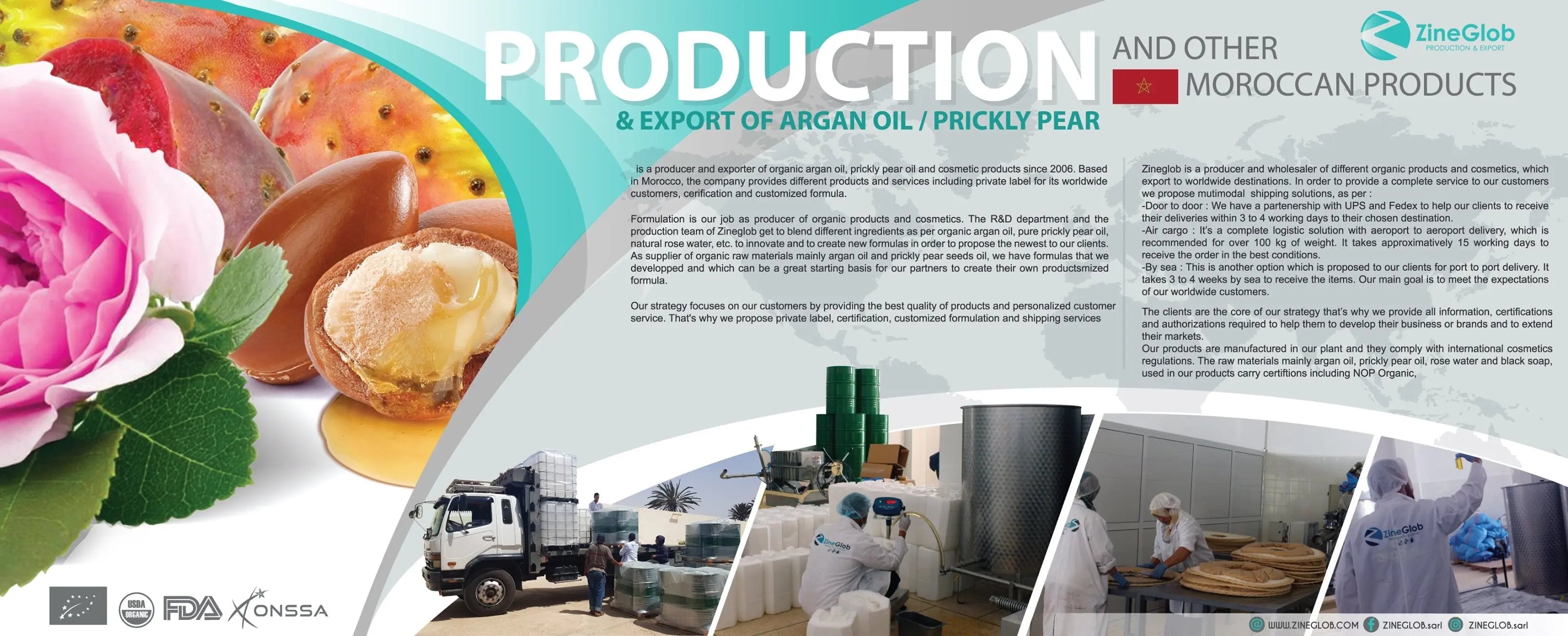
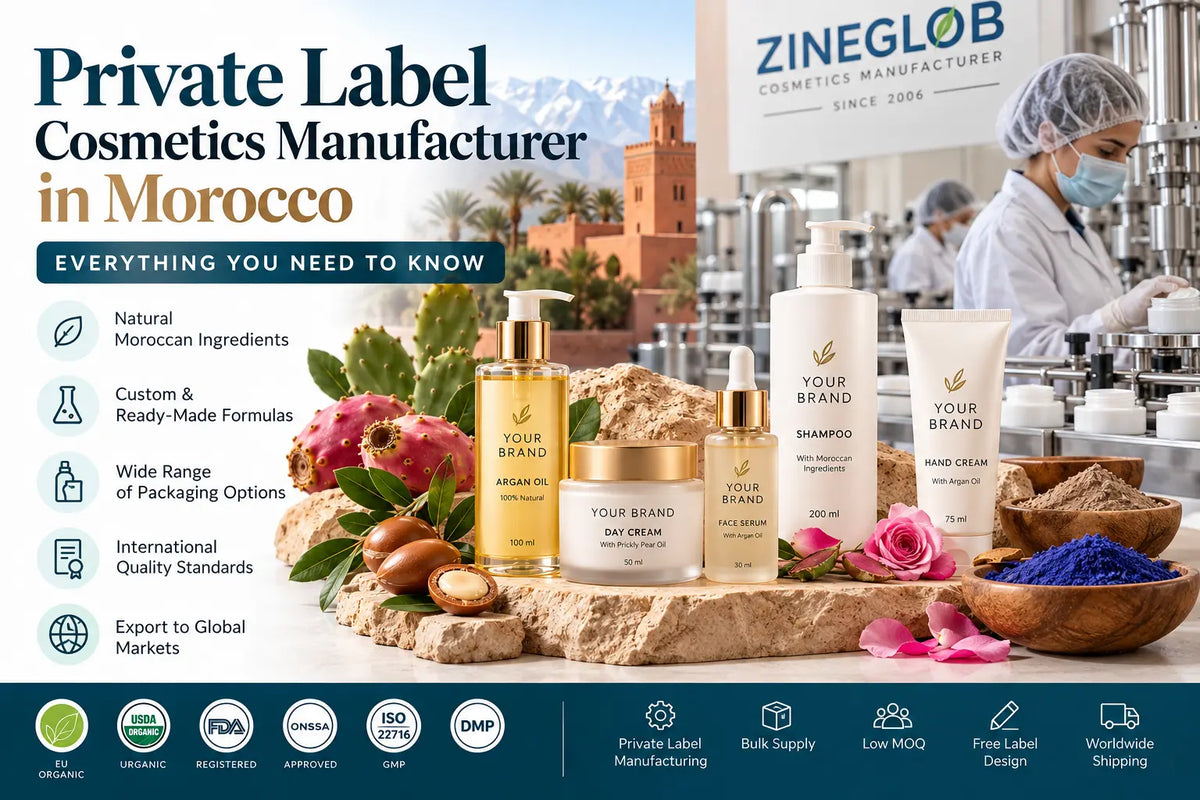
Ingredients such as argan oil, prickly pear seed oil, rose water, ghassoul, Moroccan black soap, Aker Fassi, and Blue Nila offer brands opportunities to create distinctive product collections inspired by Moroccan beauty traditions.
Working directly with a Moroccan manufacturer can also provide better access to locally sourced ingredients and specialized manufacturing expertise.
Start Your Private Label Cosmetics Project With Zineglob
Zineglob is a Moroccan cosmetics manufacturer specializing in Private Label manufacturing and Bulk supply.
We help entrepreneurs, established brands, wholesalers, and distributors turn cosmetic ideas into market-ready products.
Our manufacturing services can support different stages of your project, including:
-
Product selection
-
Cosmetic manufacturing
-
Private Label solutions
-
Bulk supply
-
Packaging
-
Label development
-
Quality documentation
-
Export support
Our objective is not simply to manufacture products, but to become a reliable manufacturing partner that helps brands develop and scale their cosmetic business internationally.
Whether you are launching your first cosmetic brand or expanding an existing product range, our team can help you develop a solution adapted to your market and business objectives.
Ready to Start Your Cosmetics Brand?
Turn your cosmetic idea into a market-ready product with an experienced manufacturing partner.
Contact Zineglob
WhatsApp: +212 606-045084
Email: contact@zineglob.com
Website: www.zineglob.com
Private Label Cosmetics | Bulk Supply | Cosmetic Manufacturing | Made in Morocco


Leave a comment
This site is protected by hCaptcha and the hCaptcha Privacy Policy and Terms of Service apply.