
How to Choose a Cosmetics Manufacturer for Your Brand
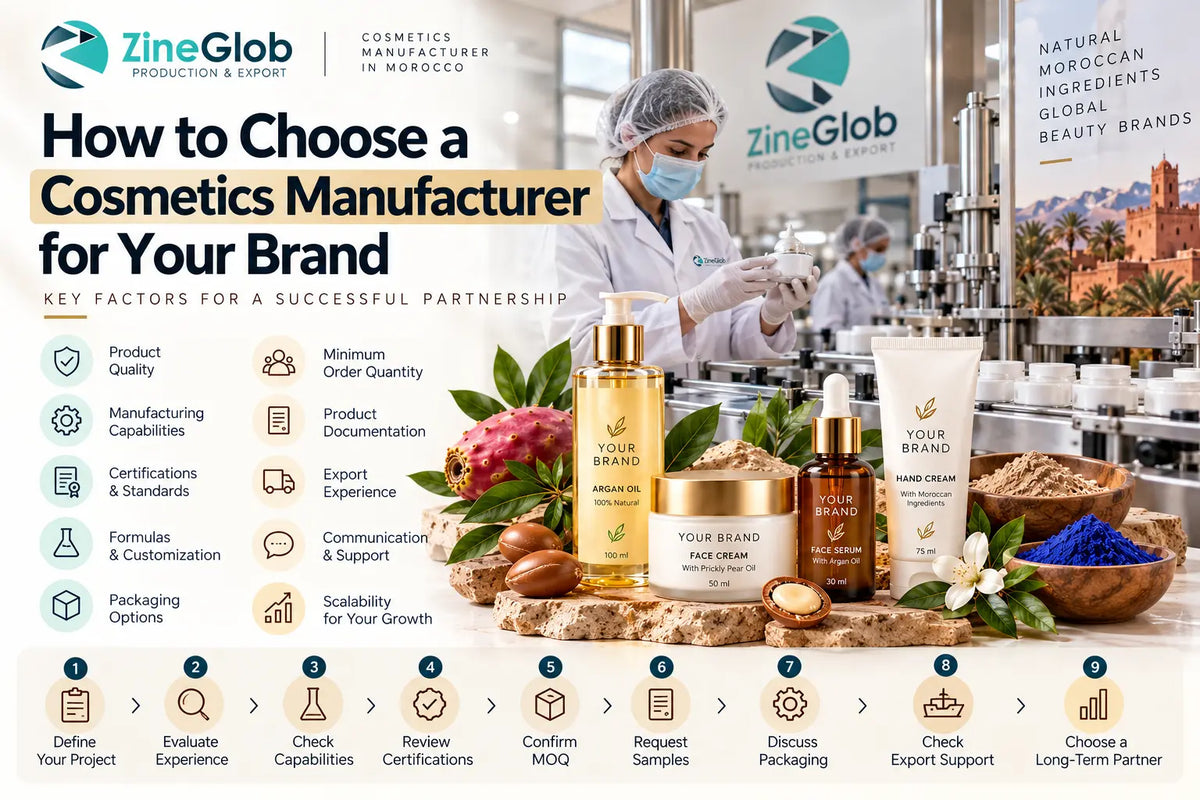
How to Choose a Cosmetics Manufacturer for Your Brand
Choosing the right cosmetics manufacturer can determine the success or failure of your beauty brand.
A good manufacturer does more than produce creams, serums, shampoos, or oils. They become a long-term partner responsible for product quality, consistency, documentation, packaging, production timelines, and sometimes export support.
Whether you are launching your first skincare brand or expanding an existing cosmetic line, selecting the right manufacturing partner requires careful evaluation.
In this guide, we explain the most important factors to consider when choosing a cosmetics manufacturer for your brand.
Why Choosing the Right Cosmetics Manufacturer Matters
Your manufacturer has a direct impact on:
-
Product quality
-
Customer satisfaction
-
Brand reputation
-
Production consistency
-
Delivery times
-
Regulatory compliance
-
Packaging quality
-
Product documentation
-
Future scalability
A beautiful brand identity and strong marketing cannot compensate for poor product quality or unreliable production.
For this reason, your manufacturer should be treated as a strategic partner rather than simply a supplier.
1. Define Your Project Before Contacting Manufacturers
Before searching for manufacturers, define your project clearly.
You should know:
-
Which products you want to launch
-
Your target market
-
Expected quantities
-
Target selling price
-
Desired packaging
-
Whether you need custom formulas
-
Your expected launch date
-
Required certifications or documents
For example, instead of contacting a manufacturer and saying:
“I want to start a skincare brand,”
a stronger project brief would be:
“We want to launch a five-product skincare range for the Saudi Arabian market, including a cleanser, serum, day cream, night cream, and face oil.”
The clearer your project is, the easier it becomes for manufacturers to provide accurate recommendations and quotations.
2. Check the Manufacturer’s Experience
Experience is an important factor when choosing a cosmetic manufacturer.
Ask questions such as:
-
How long have you been manufacturing cosmetics?
-
Which product categories do you specialize in?
-
Do you work with international customers?
-
Which markets do you export to?
-
Do you manufacture private label products?
-
Do you offer bulk supply?
An experienced manufacturer is more likely to understand common challenges related to:
-
Formula stability
-
Packaging compatibility
-
Production planning
-
Export documentation
-
Quality control
-
International customer requirements
Experience is especially important if your brand plans to sell internationally.
3. Check Their Manufacturing Capabilities
Not every cosmetic manufacturer can produce every type of product.
Some manufacturers specialize in skincare, while others focus on haircare, oils, soaps, or personal care.
Ask which products they manufacture.
Common categories may include:
Skincare
-
Face creams
-
Serums
-
Cleansers
-
Toners
-
Facial oils
-
Masks
-
Scrubs
Haircare
-
Shampoo
-
Conditioner
-
Hair masks
-
Hair serums
-
Scalp treatments
-
Hair oils
Body Care
-
Body creams
-
Lotions
-
Body scrubs
-
Shower gels
-
Massage oils
Natural and Traditional Cosmetics
-
Argan oil
-
Prickly pear seed oil
-
Moroccan black soap
-
Ghassoul clay
-
Rose water
-
Blue Nila products
-
Aker Fassi products
Choosing a manufacturer experienced in your product category can reduce development problems.
4. Understand Their Private Label Options
Manufacturers may offer different production models.
These can include:
-
White Label
-
Private Label
-
OEM
-
Custom formulation
-
Bulk supply
Make sure you understand exactly what the manufacturer offers.
For example, some manufacturers may provide ready-made formulas that you can brand quickly.
Others may allow you to modify:
-
Ingredients
-
Fragrance
-
Texture
-
Color
-
Active ingredients
-
Packaging
-
Product size
If you need a unique formula, confirm whether custom formulation is available.
5. Ask About Minimum Order Quantity
MOQ stands for Minimum Order Quantity.
This is the minimum quantity a manufacturer requires for production.
MOQ may depend on:
-
Product type
-
Formula
-
Packaging
-
Labels
-
Customization
-
Raw material availability
Startups often prefer lower MOQs because they reduce the initial investment.
However, higher quantities can sometimes reduce the unit cost.
Before comparing manufacturers, make sure you are comparing similar quantities and specifications.
A low price at 10,000 units cannot be compared directly with a quotation for 500 units.
6. Evaluate Product Quality
Never choose a manufacturer based only on price.
Product quality should be one of your main criteria.
Before placing a large order, request samples.
Evaluate:
-
Texture
-
Fragrance
-
Color
-
Absorption
-
Application
-
Packaging
-
Overall experience
If possible, compare samples from different manufacturers.
You should also check whether the product remains consistent between samples and full production.
Consistency is essential for building customer trust.
7. Ask About Quality Control
A professional manufacturer should have quality control procedures throughout production.
Ask how they manage:
-
Raw material inspection
-
Batch production
-
Filling
-
Packaging
-
Batch identification
-
Finished product inspection
-
Storage conditions
Depending on the product, quality control may also include:
-
pH testing
-
Microbiological testing
-
Stability testing
-
Compatibility testing
-
Appearance checks
-
Odor checks
Quality control reduces the risk of defective or inconsistent products reaching your customers.
8. Check Certifications and Manufacturing Standards
Certifications can help demonstrate that a manufacturer follows recognized quality and manufacturing procedures.
Relevant certifications may include:
-
ISO 22716
-
GMP
-
Organic certifications
-
Quality management certifications
-
Regulatory registrations
However, do not rely only on certification logos displayed on a website.
Ask for supporting documents and verify:
-
Who issued the certificate
-
Which company or facility it applies to
-
Validity dates
-
Certification scope
ISO 22716 is particularly relevant in cosmetics because it provides guidelines for Good Manufacturing Practices.
9. Ask About Product Documentation
If you plan to export cosmetics, documentation is extremely important.
Depending on the product and market, you may need documents such as:
-
Certificate of Analysis
-
Safety Data Sheet
-
INCI ingredient list
-
Product specification
-
Technical data sheet
-
Certificate of Origin
-
Organic certificates
-
Manufacturing certificates
Ask which documents are included with your order.
Do not wait until products are ready for shipping before discussing documentation.
10. Check Packaging Options
Packaging plays a major role in cosmetic branding.
Ask whether the manufacturer can provide:
-
Bottles
-
Jars
-
Pumps
-
Droppers
-
Tubes
-
Sprayers
-
Boxes
-
Labels
Also ask whether you can use your own packaging.
Your packaging should match your:
-
Brand positioning
-
Target market
-
Selling price
-
Formula
-
Customer preferences
Packaging compatibility is also important.
For example, certain formulas may not be compatible with specific plastics, pumps, or closures.
Your manufacturer should help verify compatibility before production.
11. Evaluate Label and Branding Support
Some manufacturers only manufacture the product.
Others provide additional services such as:
-
Label design
-
Packaging design
-
Artwork preparation
-
Printing coordination
This can simplify the process for new brands.
Before printing labels, confirm that the design includes all legally required information for your target market.
Depending on the market, labels may require:
-
Product name
-
Ingredient list
-
Net quantity
-
Directions
-
Warnings
-
Batch number
-
Expiry information
-
Manufacturer information
-
Country of origin
12. Ask About Formula Ownership
Formula ownership is an important question, especially with custom products.
Ask:
-
Is the formula exclusive?
-
Can other brands use the same formula?
-
Who owns a custom formula?
-
Is exclusivity available?
-
Is there an additional fee?
-
Is there a minimum quantity for exclusivity?
Never assume that a custom or private label formula automatically belongs exclusively to your brand.
Clarify this before development begins.
13. Understand Production Lead Times
Ask the manufacturer how long production normally takes.
Production time can depend on:
-
Order size
-
Product type
-
Raw materials
-
Packaging availability
-
Label printing
-
Formula customization
-
Testing
Also ask what happens if:
-
Packaging arrives late
-
Raw materials are unavailable
-
Artwork is delayed
-
Samples require modification
A realistic production schedule helps you plan your product launch properly.
14. Evaluate Communication
Good communication is one of the most underrated factors when choosing a manufacturer.
Pay attention to how they communicate before you place an order.
Ask yourself:
-
Do they respond clearly?
-
Do they answer technical questions?
-
Are quotations understandable?
-
Do they explain the process?
-
Do they follow up?
-
Do they provide realistic timelines?
If communication is already difficult before the order, it may become worse once production begins.
A reliable manufacturing partner should provide clear communication throughout the project.
15. Check Export Experience
If the manufacturer is located in another country, international shipping experience becomes important.
Ask whether they can provide documents such as:
-
Commercial invoice
-
Packing list
-
Certificate of Origin
-
Transport documents
Also discuss:
-
Air freight
-
Sea freight
-
Express shipping
-
Incoterms
Common Incoterms may include:
-
EXW
-
FOB
-
CIF
-
DDP
The best option depends on the destination, order size, and responsibilities agreed between buyer and seller.
16. Check Whether They Can Support Your Growth
Your first order may be small.
But your manufacturer should also be able to support your brand when sales increase.
Ask:
-
Can production volumes increase?
-
Can you add new products?
-
Can you customize formulas later?
-
Can you handle larger export orders?
-
Can you supply bulk quantities?
-
Can you support additional markets?
Switching manufacturers after building a successful product can be difficult.
It is better to choose a partner capable of supporting your long-term growth.
17. Compare Total Value, Not Only Price
When comparing manufacturers, do not compare only the price per unit.
Consider the complete offer.
A slightly higher price may include:
-
Better packaging
-
Quality documentation
-
Label support
-
Samples
-
Export assistance
-
Better communication
-
Lower MOQ
-
Faster production
The cheapest supplier may ultimately become more expensive if you experience:
-
Quality problems
-
Shipment delays
-
Missing documents
-
Packaging defects
-
Customer complaints
Choose based on value, reliability, and long-term potential.
Questions to Ask Before Choosing a Cosmetics Manufacturer
Before making your final decision, ask these questions:
-
What cosmetic products do you manufacture?
-
What is your MOQ?
-
Do you offer Private Label, OEM, and White Label?
-
Can formulas be customized?
-
Can I request samples?
-
What certifications do you have?
-
What documents can you provide?
-
What packaging options are available?
-
Can you help with label design?
-
What is your production lead time?
-
Do you export internationally?
-
Which Incoterms do you offer?
-
Can you support larger future orders?
-
Is formula exclusivity available?
-
How do you manage quality control?
A professional manufacturer should be comfortable answering these questions.
Red Flags to Watch For
Be cautious if a manufacturer:
-
Refuses to provide basic company information
-
Cannot explain its production process
-
Has no clear quality procedures
-
Refuses to provide samples
-
Provides unrealistic production timelines
-
Cannot provide required documentation
-
Makes unclear certification claims
-
Offers extremely low prices without explanation
-
Has poor communication
One red flag does not always mean the company is unreliable, but several warning signs should be taken seriously.
Choosing a Cosmetics Manufacturer in Morocco
Morocco can be an attractive sourcing destination for cosmetic brands because of its access to internationally recognized natural ingredients.
Popular Moroccan ingredients include:
-
Argan oil
-
Prickly pear seed oil
-
Rose water
-
Ghassoul
-
Moroccan black soap
-
Aker Fassi
-
Blue Nila
A Moroccan manufacturer can help brands combine traditional ingredients with modern cosmetic formulations and professional packaging.
This can be especially attractive for brands looking to create products with a strong Moroccan origin story.
Why Work With Zineglob?
Zineglob is a Moroccan cosmetics manufacturer specializing in Private Label manufacturing and Bulk supply.
We support entrepreneurs, established beauty brands, distributors, and wholesalers through different stages of their cosmetic projects.
Depending on the project, Zineglob can support:
-
Product selection
-
Private Label manufacturing
-
Bulk cosmetics
-
Formula options
-
Packaging
-
Label support
-
Quality documentation
-
Export preparation
Our approach is based on partnership.
The objective is not only to manufacture products but to help brands transform their ideas into market-ready cosmetic products and support their growth in international markets.
Ready to Choose Your Cosmetics Manufacturing Partner?
The right manufacturer should provide more than production.
They should support your project with quality, communication, documentation, flexibility, and long-term manufacturing capabilities.
Before making your decision, compare manufacturers carefully and choose the partner that best matches your brand, market, budget, and growth plans.
Contact Zineglob
WhatsApp: +212 606-045084
Email: contact@zineglob.com
Website: www.zineglob.com
Private Label Cosmetics | Bulk Supply | Cosmetic Manufacturing | Made in Morocco



Leave a comment
This site is protected by hCaptcha and the hCaptcha Privacy Policy and Terms of Service apply.